.jpg)
Building your own PC for the first time is one of the most rewarding things you can do as a technology enthusiast - and it is far less intimidating than it looks. The challenge most first-time builders face is not the physical assembly itself, which follows a logical sequence once you understand the components, but knowing which parts to buy, why each one matters and where to get them at a price that does not blow the entire budget before the first screw is turned. Newegg has been the go-to destination for PC component buyers for over two decades - its catalogue is broader, its technical filtering more granular and its Open Box and deal sections more buyer-friendly than almost any competing retailer. Savvy shoppers frequently combine seasonal sales with a valid newegg discount code to reduce the overall cost of their build, while many experienced buyers also search for the latest promo codes new egg offers before placing large orders. This guide walks you through every essential component you need to buy, what to look for in each category and how to find the best value on Newegg when purchasing them.
The CPU - Your Build's Brain
The central processing unit is the single most consequential component decision in any PC build. Everything else - the motherboard, the RAM, the cooler - is chosen in relation to the CPU, so getting this decision right first simplifies every subsequent choice. Because processors are often among the most expensive components, many builders wait for a sale event and apply a newegg discount code to maximise savings.
In 2025, first-time builders are choosing between two primary platforms: Intel's Core series and AMD's Ryzen series. Both are excellent. For general-purpose builds covering gaming, everyday productivity and light creative work, the mid-tier options from either manufacturer - Intel Core i5 or AMD Ryzen 5 - deliver performance that outpaces the vast majority of real-world use cases at a price point that leaves room for the rest of the build. For workloads involving video editing, 3D rendering or heavy multitasking, stepping up to a Core i7 or Ryzen 7 is a more appropriate investment. Checking current promo codes new egg promotions before purchasing can further improve the value proposition of these higher-end processors.
On Newegg, the CPU category filter lets you narrow by socket type, core count, thread count, base clock, boost clock and TDP - thermal design power, which determines how much cooling the processor requires. For first-time builders, filtering by socket type first is the practical approach: choose your platform, identify the socket (LGA1851 for current Intel, AM5 for current AMD), and then browse CPUs within that socket family to find the best performance-per-pound option currently on sale. Pairing these deals with a valid newegg discount code can help bring premium CPUs into a more affordable price range.
Before finalising your CPU choice on Newegg, check whether the processor includes a stock cooler in the box. AMD's mid-range Ryzen chips often include a Wraith cooler capable of handling standard workloads, which removes the need to budget for an aftermarket cooler at the entry level.
The Motherboard - Platform Foundation
The motherboard is the component that connects everything else. Your CPU socket choice determines which motherboards are compatible, and from there, the chipset determines which features - overclocking support, the number of M.2 storage slots, USB specifications and PCIe lane allocation - are available to you.
For first-time builders on a mid-range budget, a B-series chipset board is the correct choice in 2025. Intel's B760 and AMD's B650 chipsets offer the features a first-time build needs - multiple M.2 slots, PCIe 4.0 or 5.0 support, USB 3.2 Gen 2 headers and solid VRM configurations for stable power delivery - without the price premium of the enthusiast Z or X-series boards, which add overclocking capabilities most first builds will never use. Many motherboard manufacturers also participate in promotions that can be combined with selected promo codes new egg offers.
When browsing motherboards on Newegg, use the form factor filter alongside the chipset filter. ATX boards fit full-size and mid-tower cases and provide the most expansion slots and headers. Micro-ATX boards are slightly smaller and fit a wider range of cases. Mini-ITX boards are for compact small-form-factor builds and come with trade-offs in expansion capacity. For a first build, ATX or Micro-ATX in a mid-tower case is the most forgiving combination - there is room to work, room to route cables and room to add components later.
Newegg's Combo Deal system is particularly valuable when buying a CPU and motherboard together. Purchasing a compatible CPU and motherboard in the same transaction regularly qualifies for a bundle discount that reduces the combined cost by £20 to £60 compared to buying each separately - a meaningful saving on two of the more expensive components in the build. Adding a newegg discount code on top of these bundle deals can create even greater overall savings.
RAM - Speed and Capacity Matter More Than Brand
System memory is one of the more straightforward component decisions in a first build, though first-time buyers are frequently confused by the volume of options and the speed specifications attached to them. The practical considerations are simple: platform compatibility, capacity and speed tier.
Current Intel and AMD platforms both support DDR5 memory. If you are building on a current-generation platform, DDR5 is the standard you will be buying. The capacity sweet spot for a first build in 2025 is 32GB - two 16GB sticks run in dual-channel configuration, which delivers meaningfully better performance than a single 32GB stick. 16GB total is workable for light gaming and productivity but will feel constrained within a year or two as software memory requirements increase. Before purchasing memory kits, it is worth checking available promo codes new egg discounts that may apply to selected brands.
RAM speed is expressed in MT/s (megatransfers per second). For DDR5, a kit running at 6000 MT/s represents the performance sweet spot for AMD Ryzen platforms and a strong value choice for Intel. Beyond 6400 MT/s, the real-world performance gains in gaming and everyday tasks are marginal and the price premium increases sharply. On Newegg, filtering the RAM category by DDR generation, capacity and speed range quickly surfaces the best-value kits. Brands like Corsair, G.Skill and Kingston are all reliable choices; avoid no-name kits that list specifications but carry no brand warranty. Combining sale pricing with a verified newegg discount code remains one of the easiest ways to reduce the final build cost, especially when purchasing multiple components together. Many shoppers also compare available promo codes new egg deals during major sales events to secure the best possible price.
Storage - NVMe SSD as Your Primary Drive
If there is one component decision that has changed more dramatically over the past five years than any other, it is storage. Mechanical hard drives have been relegated to secondary storage roles - bulk file archives, media libraries and backups. Your operating system, applications and active game library should live on an NVMe solid-state drive, full stop. The performance difference between a mechanical drive and a PCIe 4.0 NVMe SSD is not incremental - it is transformational. Windows boots in under ten seconds. Applications open instantly. Game load times that previously took 30 to 45 seconds drop to under five.
For a first build, a 1TB PCIe 4.0 NVMe SSD is the minimum sensible starting point. 2TB is the recommended capacity if the budget allows, particularly for builders who plan to install multiple large games. The PCIe 4.0 generation offers the best performance-per-pound in 2025; PCIe 5.0 drives exist but carry a significant price premium for sequential read speed improvements that rarely manifest as noticeable differences in everyday use.
SSDs on Newegg appear in Shell Shocker deals more frequently than almost any other component category. Samsung, Western Digital, Seagate and Kingston SSDs regularly drop to exceptional prices during deal events. Setting a price alert for your target 1TB or 2TB drive at 10 to 15 percent below the current listing price and waiting for a deal is a realistic strategy that typically pays off within two to four weeks.
 Browse Newegg's SSD category - filter by PCIe generation and capacity, then enable the On Sale filter to surface discounted drives that meet your specification.
Graphics Card - The Most Budget-Sensitive Decision
For gaming builds, the graphics card is typically the single most expensive component and the one that most directly determines the gaming experience. For productivity-focused builds with no gaming requirement, integrated graphics built into modern AMD and Intel CPUs handle everyday tasks - video playback, web browsing, document work, video conferencing - without requiring a discrete GPU at all, which frees up a substantial portion of the budget for other components.
For gaming builds, the GPU decision comes down to resolution target and budget. At 1080p, current mid-range cards from both NVIDIA and AMD deliver excellent frame rates in modern titles. At 1440p, stepping up to the higher mid-range tier produces a noticeably smoother experience. At 4K, a high-end card is necessary to achieve playable frame rates in demanding games.
GPU pricing on Newegg fluctuates more than almost any other component category because it is influenced by both new product launches and broader semiconductor market dynamics. The most reliable strategy for first-time builders is to identify two or three cards in the target tier, add them to the Newegg Wish List, set price alerts and be ready to purchase quickly when a Shell Shocker or Daily Deal brings one to an attractive price. Buying a GPU at standard retail outside of a deal event is almost always a mistake when a two to three week wait would save £40 to £80 on the same card.
Newegg's Open Box section is worth checking for graphics cards specifically. A Grade A Open Box GPU is functionally identical to new - the performance is identical, the card has been tested, and the cosmetic difference is irrelevant for a component installed inside a case. The Open Box discount on a mid-range GPU can reach 15 to 25 percent, which on a £350 card represents a saving of £52 to £87.
CPU Cooler - Do Not Overlook Thermal Management
Every CPU generates heat under load, and that heat must be removed efficiently to allow the processor to maintain its advertised performance without throttling. Many mid-range CPUs include a bundled stock cooler adequate for standard operating conditions, but any build targeting sustained high-performance workloads - gaming sessions lasting several hours, video rendering, heavy multitasking - benefits meaningfully from an aftermarket cooler.
For first-time builders, an air cooler in the mid-range tier is the most sensible choice. Tower air coolers from brands like Noctua, be quiet! and DeepCool deliver excellent thermal performance at a significantly lower price than all-in-one liquid coolers, with no additional installation complexity, no pump or tubing to maintain and no risk of leak-related component damage. The Noctua NH-U12S and the DeepCool AK620 are both well-regarded options that appear regularly in Newegg's Daily Deals and promotional events.
When purchasing a CPU cooler on Newegg, verify socket compatibility before adding to cart. The product listing's compatibility filter makes this straightforward - entering your CPU's socket type surfaces only coolers that will physically mount on your board. Purchasing an incompatible cooler and returning it is an avoidable delay on your build timeline.
Most aftermarket coolers include a small quantity of thermal paste pre-applied or in a bundled syringe. This is sufficient for installation. You do not need to purchase additional thermal paste for a first build unless the cooler listing explicitly states none is included.
Power Supply Unit - Buy More Headroom Than You Think You Need
The power supply unit is the component most frequently under-budgeted in first builds and the one whose failure causes the most collateral damage. A low-quality PSU that fails under load can damage the components connected to it. This is not a category to economise on by buying the cheapest unit available.
PSU wattage should be calculated based on your component selection, with a 20 to 25 percent headroom buffer above the estimated system draw. A build with a mid-range CPU and GPU will typically draw 300 to 400 watts under sustained gaming load; a 650-watt unit provides comfortable headroom and allows for future upgrades without requiring a PSU replacement. A high-end gaming build with a power-hungry GPU may require 850 watts or more.
The 80 PLUS efficiency rating - Bronze, Gold, Platinum, Titanium - indicates how efficiently the PSU converts AC wall power to DC power for your components. Gold-rated units offer excellent real-world efficiency at a reasonable price premium over Bronze-rated alternatives. Platinum and Titanium are reserved for enthusiasts and workstation builders where long run-times make the incremental efficiency gains financially meaningful.
On Newegg, filtering the PSU category by wattage range and 80 PLUS certification quickly narrows the field to appropriate options. Corsair, Seasonic, EVGA and be quiet! are all manufacturers with strong reliability records at the price points first-time builders are working within. Modular or semi-modular PSUs, which allow unused cables to be detached rather than bundled inside the case, make cable management considerably easier and are worth the modest premium for a first build.
PC Case - More Than an Aesthetic Choice
The case houses every component and determines the airflow environment your build operates in. A case with poor airflow forces components to operate in warmer ambient conditions, which reduces sustained performance and longevity. A case with good airflow - front and bottom intake fans pulling cool air across components, rear and top exhaust fans expelling warm air - keeps temperatures in check and allows your CPU and GPU to maintain their performance targets under load.
For first-time builders, a mid-tower ATX case with at least two pre-installed fans, a tempered glass side panel and straightforward cable routing channels is the standard recommendation. The tempered glass panel is not purely cosmetic - it allows you to observe component status during the build and quickly identify any seating or installation issues. Cable routing channels and Velcro tie points behind the motherboard tray make cable management achievable even for first-time builders who have never routed a single cable before.
When browsing cases on Newegg, check the listed GPU clearance specification before purchasing. High-end graphics cards can exceed 340mm in length, and a case with a maximum GPU clearance below that will not accommodate them without modification. Similarly, verify CPU cooler height clearance if you have already selected a tower air cooler - some compact cases have tight clearance limits that rule out taller coolers.
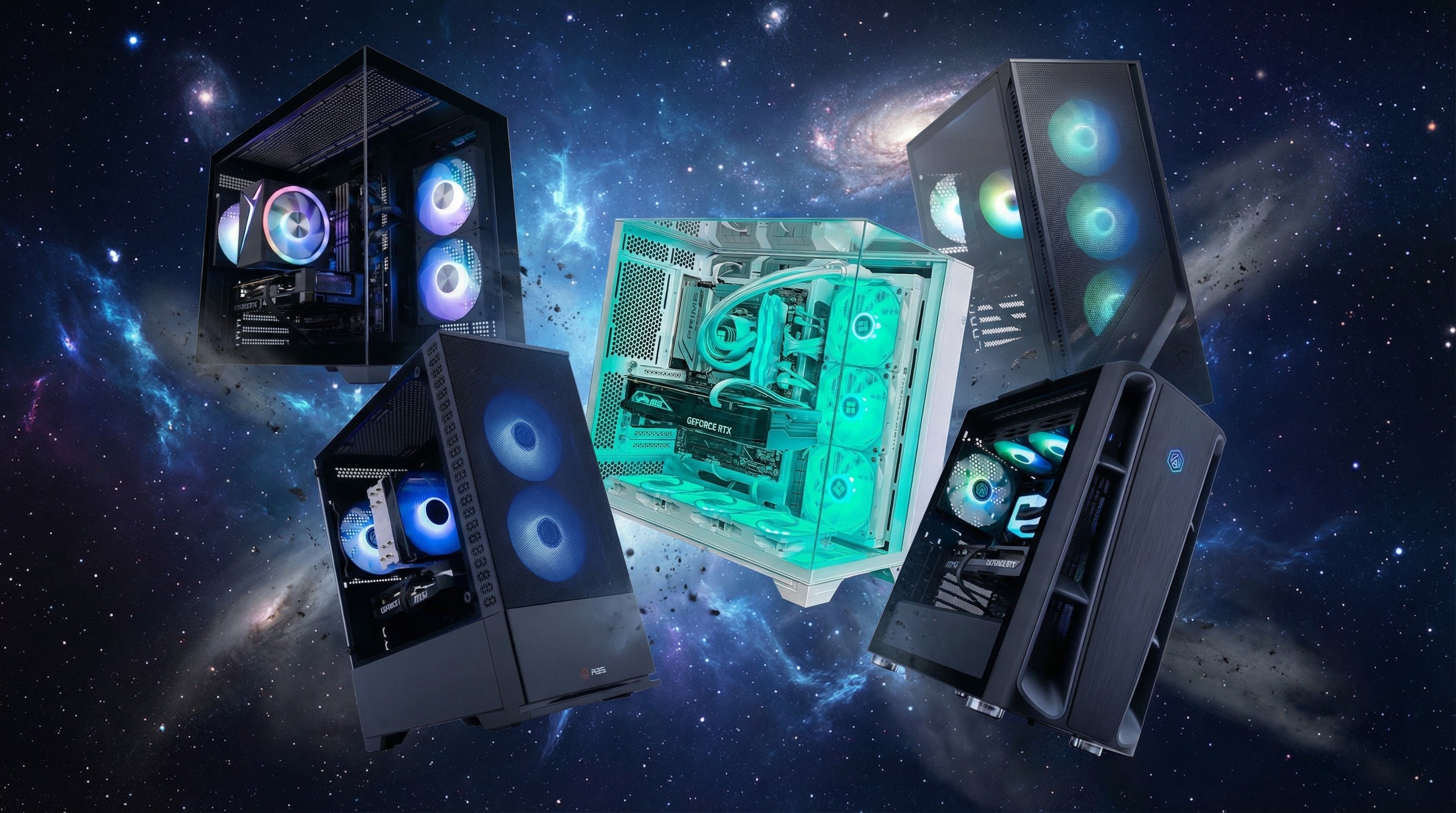
 Newegg's PC case category - filter by form factor and GPU clearance to match your case to your components before purchasing.
Operating System - Windows Licensing Made Simple
A completed PC build needs an operating system, and for the vast majority of first-time builders, that means Windows 11. Newegg sells OEM Windows 11 Home and Pro licence keys at notably lower prices than retail boxed copies - the OEM licence is tied to the hardware it is first activated on but is otherwise fully functional and receives all updates and support. For a first-time personal build, Windows 11 Home OEM is the correct purchase; Pro adds features relevant to enterprise and business environments that most home users will never use. Before purchasing a licence, many buyers check for an active newegg discount code to reduce software costs alongside their hardware order.
Purchasing the Windows licence through Newegg alongside the rest of your components consolidates the purchase in a single order and occasionally qualifies for a combo discount when bundled with an eligible motherboard or CPU. The licence is delivered digitally - a product key emailed to your account - which means no physical delivery to wait for and no USB drive required for installation if you create the installation media separately. Seasonal promotions and selected promo codes new egg offers can make these licences even more affordable for budget-conscious builders.
Peripherals - The Components That Define Your Experience
The components described above build a complete, functioning PC - but what you interact with every day is the peripherals sitting on your desk. Monitor, keyboard, mouse and headset are the touchpoints through which every hour of use is experienced, and buying thoughtfully in each category produces a meaningfully better daily experience than defaulting to whatever happens to be cheapest. Smart shoppers often reserve part of their budget for peripherals and look for a valid newegg discount code before checking out.
Monitor: For a first build targeting 1080p gaming, a 24-inch IPS panel running at 144Hz or higher represents the current value standard. IPS panels deliver better colour accuracy and viewing angles than VA alternatives at similar price points. For 1440p, a 27-inch panel is the natural match. LG, Samsung, ASUS and Acer all list competitive options across Newegg's monitor category, with regular appearance in Daily Deals and combo deals when paired with compatible GPU purchases. During major sales periods, additional savings are often available through temporary promo codes new egg promotions.
Keyboard and Mouse: Corsair, Logitech G and SteelSeries are the three brands that appear most consistently in Newegg's promotional events for peripherals. Following these brands' store pages on Newegg via the brand follow function sends a notification whenever any product in their catalogue goes on sale - an efficient way to catch deals without manually checking the site daily. Combining sale pricing with a newegg discount code can result in substantial savings across multiple peripherals.
Putting the Build Together - A Purchasing Strategy
Armed with the component list above, the most effective purchasing approach for a first-time builder is not to buy everything on the same day. Component prices fluctuate on different schedules, and spreading purchases across two to four weeks while monitoring Newegg's Daily Deals and Shell Shocker sections consistently reduces total build cost by 15 to 25 percent compared to buying everything at once at standard retail prices. Tracking current promo codes new egg offers throughout this period can further reduce the overall investment required.
Start by adding your entire component shortlist to a Newegg Wish List and setting price alerts at 10 to 15 percent below current listing prices. Subscribe to the Newegg newsletter for early access to Shell Shocker notifications and exclusive promo codes. Take advantage of Combo Deal pricing when purchasing the CPU and motherboard together. Check the Open Box section for graphics card and SSD listings before committing to new-unit purchases at full price. Use CamelCamelCamel to verify that any advertised sale price represents a genuine discount against recent price history before completing a transaction. Before finalising checkout, search for an active newegg discount code and compare available promo codes new egg promotions, as these can often stack with selected sale prices.
The combination of methodical component selection, patient deal monitoring and strategic use of Newegg's discount tools transforms a potentially overwhelming first build into a well-paced, well-priced project. The result is a machine built exactly to your requirements, purchased at a price that reflects the real value of each component rather than the convenience premium of impulse buying - and the considerable satisfaction of knowing you assembled every part of it yourself. Consistently checking for a newegg discount code and monitoring the latest promo codes new egg offers remains one of the simplest ways to maximise value throughout the entire PC-building process.